ASIO4ALL - универсальный драйвер ASIO - русская версия
Установка звукового драйвера ASIO4ALL довольна проста и не требует особых усилий. Все что вам потребуется, это скачать asio4all драйвер с официального сайта asio4all и установить.
Содержание
Кстати теперь при установке Fl Studio в комплекте уже идет этот драйвер и после того как установишь fl studio открывается установка драйвера asio4all.
Но перед установкой ASIO4ALL проверяйте последнюю версию драйвера на официальном сайте, так как в новой версии исправляются ошибки совместимости и различные баги.
Зачем нужно устанавливать этот драйвер? Конечно же можно использовать и стандартный sound driver. Но разница между ними есть. Asio4all меньше нагружает звуковую карту чем стандартный. Он меньше использует процессов и дамп буфера, что позволяет создавать более объемные проекты без тресков и других шумов. Трески появляются когда ваш проект станет большим и с немалым количеством плагинов и звуков.
Так что смело устанавливайте драйвер asio4all
Установка звукового драйвера ASIO4ALL
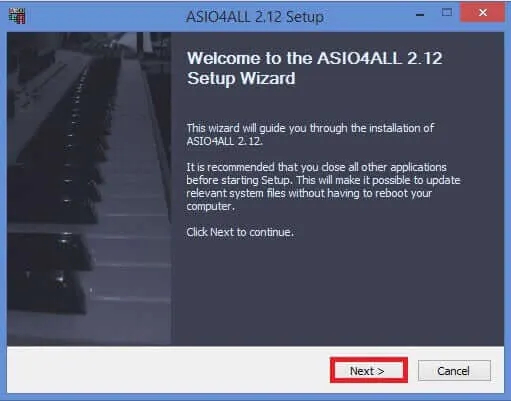
Запускаем установочный файл где в следствии откроется мастер установки. Нажимаем - Далее.
После открывается окно лицензионного соглашения ставим галочку
О том что принимаем соглашение и нажимаем - Далее.
Теперь откроется окно что на рисунке ниже. Здесь ни чего не надо менять. Также нажимаем - Далее.
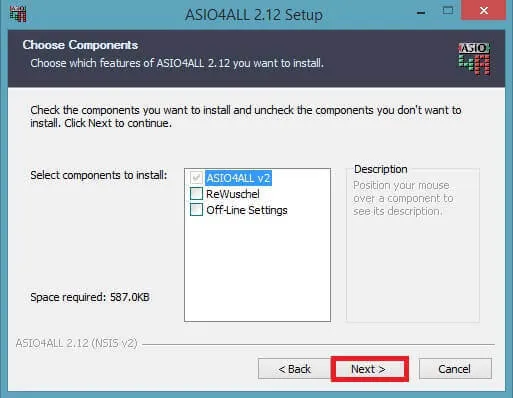
На следующем окошке можно указать путь установки. Его не меняем и нажимаем - Установить (Install)
На этом установка драйвера asio4all завершена.
Следующий урок по
Changes since version 2.11:
Changes since version 2.10:
Changes since version 2.11 Beta 1:
Changes since version 2.10:
Changes since version 2.10 beta 1:
Changes since version 2.9:
Changes since version 2.9 beta 5:
October 2008: Version 2.9 (beta5) out now!
(Plus, the final 2.9 release date has been scheduled for the 5th of November
Download ASIO4ALL 2.9 (beta5)!
Changes since version 2.9 beta4
Download ASIO4ALL 2.9 (beta4)!
Changes since version 2.9 beta3
Download ASIO4ALL 2.9 (beta3)!
Changes since version 2.9 beta2
The recent sad news is that Carlos Mateo ("Texvo")
died on August 4 2008. For his outstanding contribution to the music community, he will be missed by many. The news came along with a note that suggested his involvement in the conception and/or development of ASIO4ALL. Consequently, people have started sending condolences.
This puts me in the difficult situation of having to clarify that Carlos was at no point in time involved in either the conception or the development of ASIO4ALL. What is true, however, is the great amount of time and dedication he spent helping other people with their audio hardware and software issues - including issues surrounding ASIO4ALL, at times. He surely will be missed!
Download ASIO4ALL 2.9 (beta2)!
Changes since version 2.9 beta1
Download ASIO4ALL 2.9 (beta1)!
Changes since version 2.8
Note that more localizations may be added as soon as I get in sync with
folks who volunteered! -
| ASIO4ALL 2.8 - English | |
| ASIO4ALL 2.8 - Deutsch | |
| ASIO4ALL 2.8 - Chinese (English manual) |
Changes since version 2.8 beta 2:
April 2007: Version 2.8 BETA 2 -
Download
ASIO4ALL 2.8 BETA 2! Changes since version 2.8 Beta 1:
March 2007: Version 2.8 BETA 1 -
Download
ASIO4ALL 2.8 BETA 1! Changes since version 2.7:
April
2006: Version 2.7 (final) released!
| ASIO4ALL 2.7 - English | |
| ASIO4ALL 2.7 - Deutsch | |
| ASIO4ALL 2.7 - Chinese (English manual) |
Changes since version 2.7
beta 4:
April 2006: Version 2.7 BETA 4 -
Download
ASIO4ALL 2.7 BETA 4! Changes since version 2.7 beta 3:
18 April
2006: Version 2.7 BETA 3 -
Download
ASIO4ALL 2.7
BETA 3! Changes since version 2.7 beta 2:
March
2006: Version 2.7 BETA 2 -
Download
ASIO4ALL 2.7
BETA 2! Changes since version 2.7 beta 1:
March
2006: Version 2.7 BETA 1 -
Download
ASIO4ALL
2.7 BETA 1! Changes since version 2.6:
April 2005: Version 2.6 Released!
Download
ASIO4ALL 2.6! Changes
in version 2.6:
Revision History:
19 Mar 2005:
Version 2.5
06 Mar 2005:
Version 2.4
11 Feb 2005:
Version 2.3
07 Dec 2004:
Version 2.2
26 Nov 2004:
Version 2.1
- More changes to the automatic latency compensation (still work in progress) Fixed bug that would disable audio input in Podium. Fixed a parameter load/save issue. The bad news is that you will have to re-do all the settings made with version 2.0. Sorry! Still features the Controversal Arrow(tm), which, nevertheless, is here to stay!
11 Nov 2004:
Version 2.0
Direct DMA Mode no longer
selectable for PCMCIA devices.
Changing the sample rate in
the host application should not cause erratic behavior anymore.
There was a race condition
that caused Sonar to crash on occasion. This has been fixed.
Direct DMA Buffer mode
resyncs somewhat faster now, sometimes and under some
circumstances
Finally: 44.1kHz Sample Rate
4 ALL! I did the leg work reading up on that DSP stuff. ASIO4ALL
now does sample rate conversion whenever required in order to
support 44.1 kHz. As far as my personal judgement, I would
consider resampling quality decent at least - can _you_ hear a
difference? Not too bad when considering that my last piece of
DSP work was like 12 years ago... Resampling
currently only works in buffered mode (DMA box _not_ checked)
Also, there is a new check
box
that lets you force resampling at 44.1kHz (always
resampled
from/to 48kHz). The reason
for this option: I discovered that a number of low-cost audio
gear have the WDM driver resample
on-the-fly. The quality of this, more often than not, is very
questionable. Further, you may have ended up in a situation where
decent latency figures were achievable @48kHz, but severe
crackling
did occur at 44.1kHz. If this
sounds like your system, this would be the box to check (Well, at
least, this was the ultimate fix for _my_ lappy...)
Added another check
box
: "Disable Input". The purpose of this one is explained
easily: If you do not need ASIO input, you can achieve better
overall latency i.e.
smaller buffer
sizes when checking this option.
Changed the behavior of the
Control Panel somewhat: Whenever you check the Direct DMA box and
the current settings are not very reasonable, buffer size and
iodelay settings are adjusted to reasonable defaults. This is
because some settings that are o.k. in buffered mode simply don"t
make sense in Direct DMA Mode and may make the user believe that
Direct DMA Mode does not work on their system due to excessive
crackling for a prolonged period after switching to this mode.
Always remember: Direct DMA Mode is a cool feature, but it needs
a couple of seconds to settle down whenever the driver is
re-started. Unfortunately, Cakewalk Sonar, for instance, restarts
ASIO on every playback/stop/playback cycle, making Direct DMA
Mode virtually unworkable in this environment.
In order to improve the "User
Experience" in multi-device setups, all control panel
settings are now stored per device. Switching between devices
will recall previously applied settings.
In buffered (non-DMA-) mode
the driver is now less likely to drop input buffers. This means
an improvement in input quality/latency on some systems.
Direct DMA Buffer Mode has
been redesigned for more stability and timing accuracy.
Unfortunately, this requires you to re-adjust the Buffer Size and
Delay settings. So, if you had a setting of 128/3/3 in the past,
you would now end up with e.g. 128/6/8. This does not mean an
increase in latency, however! It is just that the physical ranges
of these sliders have moved somewhat. Also, an issue has been
fixed that would have made it impossible to set a reasonable
Input Delay on some systems.
Improve media synchronization
in Direct DMA Buffer Mode.
Added a facility and desktop
shortcut to launch the control panel off-line. Off-line changes
have no immediate effect. Hope you like the artwork ;-)
Workaround for broken
Creative drivers, causing a BSOD with some Sound Blaster cards.
The Microsoft
drivers for the same
cards appear to have always worked fine.
Fixed a bug that caused no
inputs being available with some USB devices.
Fixed a bug that would make
the driver not work with some applications if the audio device
does not support 48kHz
Added workaround for
situations where a buggy host meets a buggy WDM driver. This
would manifest itself in an ASIO driver error if the application
is started the second time.
Minor change that might
improve input quality in certain setups.
Made it work with ISA cards
(yeah, right!) that do not support 48000Hz sampling rate, such as
the ESS Audio Drive series - well, as long as there"s a WDM
driver, why not give it a try?
Requirements for DMA box
being shown have been relaxed a little. Never check this for USB
devices, though!
Fix a problem with
multi-channel recording cards i.e. it runs on my DSP2000 C-Port
again ;-)
Direct DMA Buffer mode has
been tweaked a little for better performance (needs testing) As a
negative side effect, things may need a longer time to get in
sync after you start the application or apply some changes in the
control panel. Resyncing will take a couple seconds now, during
which crackling and stuff will be heard.
General workaround for all
host applications that happen to drop BufferSwitch() calls. Makes
Reason workaround obsolete i.e. no special treatment anymore.
Should sort of fix things for Tracktion, too.
Samplitude no longer crashes
when trying to open the control panel.
Add a Message Box whenever it
has been found that the audio device is already in use. In nine
out of ten cases this is because the "Microsoft GS Wavetable SW
Synth" is enabled as a MIDI output device somewhere.
Add a version number display
to the ASIO control panel so it is not so easy anymore to get
things mixed up.
There has been a really
important fix and so I decided to release a new version just one
day after the last one. On the way from rev 1.1 to 1.2 I
introduced an extremely stupid bug that made seem stuff not work
anymore that used to run just fine with rev. 1.1
The ASIO control panel is now
being updated immediately after a different audio device has been
selected. This used to be a minor annoyance in systems with more
than one audio device.
Good news for some! ASIO4ALL
now works with even more audio devices. There now is a new check
box "Force 16bit Samples", which activates a workaround for a
situation where the WDM driver reports a bit depth of e.g. 20 but
has no plans to actually support that when asked to. In "normal"
Windows this is no problem because in Windows, everything is just
16 bit. But ASIO4ALL tries to max out your hardware, also as far
as bit depth. Most notably this workaround has been reported to
get
SigmaTel
chips to work with ASIO4ALL.
Minor change in the way
ASIO4ALL connects to the WDM driver interface.
This time it"s been quite a
number of changes. I"m not through with everything yet, but
because of the number of fixes/ improvements already made, I
decided to put out this new version for the time being.
Fixed a rather stupid bug in
the code that would have caused distorted output on all channels
except the left one for devices where input and output bits per
sample are not the same. To add insult to injury, most newer AC97
codecs fall into that category (e.g. 20bit output/16bit input).
Sorry "bout that!
Add workaround for a number
of ill behaved host applications. If you ever encountered this
phenomenon: You start your host application, enter the ASIO
control panel, optimize buffer settings so you have a clean sound
and then exit and restart the application and all of a sudden you
are in crackling hell -> curse no longer, we now have a
workaround for that! This only applies to buffered mode i.e.
Direct DMA Buffer option _not_ checked.
Improve support for some
multi-channel devices and fix an issue with devices that did show
up in the device list but no sample rate could be set (Actual
error message depends on how much your sequencer got confused by
that) More cards should be able to run on 44.1kHz vs. 48kHz only.
Add support for 24bit packed
PCM sample format (vs. 32bit), which should resolve an issue with
>16bit devices that do not support 32bit PCM output.
Fix plenty of reasons why it
could have crashed when doing stuff in the ASIO control panel (Oh
well...)
Enable operation with devices
that have no inputs. In this case, two phantom inputs are
created, because some applications seem to require this.
USB audio devices should now
show up in the device list. (at least some should, still having
problems with others...) If you install this version over a
previous one or if other things happen that I have no control
over, you may be able to check the Direct DMA Buffer option in
the ASIO control panel for your USB audio device: DON"T! (unless
your favorite color is blue). The Windows internal USB audio
driver (usbaudio.sys) has a bug that makes the system go kaboooom
if you enable this option for USB audio devices!
Update on the
Reason
issue:
I have received a response from the
Propellerheads
and it seems that my error description below is not entirely
correct. With the information I have received, I have been able
to implement a much better workaround. If you are using this with
Reason
this new version is a must. Crackles due to screen updates are
virtually history now! The Low Priority Audio check box
introduced in rev. 1.1 is gone. The driver now automatically
checks for
Reason
being the current host application and silently applies the
(better) workaround in this case.
Fix a bug in the device
enumerator that under certain circumstances would prevent some
devices from showing up in the device list.
Add workaround for some weird
Reason
behavior. This is experimental, though. There is a new check box
now which you are supposed to check if and only if you are
running
Reason
with this driver. If you are a
Propellerhead
reading this: What makes you think that calling ASIOoutputReady()
asynchronously
is going to help matters
in any way one can think of? Do it like the rest of the Industry
do:
BufferSwitch()->FillOutput()->ASIOoutputReady()->MoreStuff()->Return().
Suddenly you"ll realize that things do not necessarily have to
crackle if you move stuff around the screen. It does not need an
extra thread, get rid of it!
Installation over a previous
version no longer resets the control panel settings to defaults.
In order to install with default parameters, you need to
uninstall the previous version first.
1.0 (Final)
Added Direct DMA Buffer I/O
for devices that support it. This mode is very soft on the CPU
and latencies can be achieved that are equal to the values one
gets with pro gear.
In order to understand why
this works on some systems and on others it does not, one needs
to know that WDM audio drivers come in two flavors
WaveCyclic and WavePci. We only have a chance with WavePci,
because these drivers do not actually copy audio data from our
buffer but rather make the buffer we submit to them their current
DMA buffer. But we still know where our buffers are, even after
we submitted them to the WDM audio driver, right? Thus, when
writing to the buffer currently being played, we are writing
directly to the DMA buffer! The tricky bit is to figure out where
exactly to write and how to keep things in sync.
In a nutshell, this is how
the Direct DMA Buffer mode works. Unfortunately, most consumer
grade stuff comes with WaveCyclic type drivers only, it seems.
More feedback has now given me the impression that
ironically some of the most widespread
AC97 chips actually _do_ support this mode, contrary to my
statement above. Good news? Maybe for you but not for me since
the "Ali Audio Accelerator" on my lappy isn"t one of these!
*grrrrrrr*
Some minor improvements.
1.0 Beta:
First stable version.
Некоторые, в основном не новые, а так же "дефолтные" (встроенные) звуковые карты, иногда используемые музыкантами для записи и воспроизведения своих музыкальных композиций, часто не всегда ведут себя в работе с различными "музыкально-редакторным" софтом максимально идеально с точки зрения адаптации к обычно, профессиональным требованиям софта к "звуковому железу".
По-сути, ничего "такого" этот драйвер не делает, кроме как, выражаясь образно, "сближает, увеличивает количество точек соприкосновения" и звукового железа - обеспечивает обмен аудиопотоком в полной мере. ...В каких-то случаях включает "спящие" возможности . Правда, если б
Ещё и минимизировал задержку бы в обработке до возможности нормальной, к примеру, на - цены б ему не было:-)
Как советует разработчик , для того, чтобы добиться наилучших результатов в обработке звука, следует выключить системные звуки операционной системы (звуки включения и завершения работы виндовс не в счёт), что менее предсказуемые звуки "могут блокировать процесс инициализации звукового устройства для ASIO4ALL"
Настройка драйвера ASIO4ALL
При настройке драйвера ASIO4ALL универсальных нет рекомендаций. Каждый случай индивидуален. После опознания приложением драйвера ASIO4ALL, в трее появляется иконка, которая может выглядеть в зависимости от режима по-разному. При воспроизведении звука:
- во время остановки драйвера.
Если иконка драйвера в трее не наблюдается, значит, сейчас он не используется. Иногда изменения в настройках могут вступать в силу только после перезагрузки звукового приложения. Во всех звуковых, (музыкальных) редакторах, в опциях настроек звука имеется кнопка, например, " "
, при помощи которой (так же, как и при нажатии на значок в трее) вызывается панель настроек этого драйвера.
1. Список найденных звуковых WDM устройств.
Индикатор состояния двойной. Рядом со значком активности находится индикатор состояния устройства:
- устройство успешно включено.
- сейчас устройство бездействует.
- устройство недоступно (может быть из-за использования его в другом приложении).
- устройство по непонятной причине неуправляемо.
2. Настройка размера буфера (в семплах).
Больше значение - больше задержка. Если при воспроизведении звука наблюдаются выпадения сигнала в виде тресков, "обрывов" - следует увеличить это значение.
3. Кнопка восстановления настроек по умолчанию.
Вариант "возврата" настроек в исходные, если в процессе настроек драйвера, качество его работы ухудшилось.
4. Кнопка для включения расширенного режима настроек.
Включает дополнительные опции для возможности тонких настроек драйвера. Вызывая этот режим, предстаёт следующий вид:
Дополнительные настройки драйвера
5. Компенсация задержки.
Этот параметр следует трогать, в основном, при работе в секвенсоре, когда возникает задержка при озвучивании MIDI команд, с параллельно воспроизводимыми аудиотреками.
6. Использование аппаратного буфера.
Возможность использования аппаратного буфера обычно имеется только в драйверах типа WavePCI
. Главное преимущество использования аппаратной буферизации в том, что при этом меньше расходуются основные вычислительные ресурсы. Рекомендуемые отправные значения варьируются в диапазоне от 128 до 256.
7. Число буферов ядра.
При неиспользовании аппаратной буферизации, установка этих значений отвечает за число буферов на выходе. Каждый дополнительный буфер увеличивает задержку в соответствии с его размером. С более высокими значениями увеличивается и стабильность, и задержка. С низкими значениями эффект обратный.
8. Преобразование между 44.1 и 48 кГц.
ASIO4ALL имеет возможность конвертировать частоту семплирования от 44.1 кГц в 48 кГц и обратно в реальном времени. Конвертирование происходит автоматически в тех случаях, когда ASIO4ALL открывается в режиме 44.1 КГц, а WDM-драйвер эту частоту не поддерживает.
9. Принуждение к работе WDM-драйвера в 16-разрядном режиме.
Эта функция работает только с драйверами, которые имеют возможность работать с
Потоками разрядностью выше 16 Бит (и менее 24), но фактически отказываются от этого.
Например, таким драйвером является SigmaTel AC97
Если вам доводилось подключить гитару в линейный или микрофонный
Вход вашей встроенной аудио-карты, вы наверняка заметили существенную
Задержку звука.
Специально для решения проблем с задержкой был разработан протокол
ASIO. Его поддерживают все аудио-интерфейсы с инструментальным входом, и
Если вы обладатель оного, все необходимое уже было установлено вместе с
Драйверами самого устройства.
Если же вы довольствуетесь встроенной аудио-картой или аудио-картой
Без поддержки ASIO вам надо скачать и установить универсальный
Бесплатный драйвер ASIO4ALL .
Интерфейс настройки ASIO у различных производителей часто отличается, но суть всегда одинаковая. Поэтому общий смысл настройки я покажу на примере универсального дравйвера ASIO4ALL , а н
Юансы (если они есть) конкретно вашего девайса вам придется изучить самостоятельно.
Кроме того, сразу затрону тему настройки аудио параметров в программе обработки гитарного сигнала (на примере популярного Guitar Rig).
Asio4all
Перейдем в настройки драйвера щелкнув по кнопке ASIO Config
. У вас откроется окно конфигурации драйвера выбранного устройства, в случае ASIO4ALL оно будет выглядеть как на скриншоте ниже.
Окно настройки ASIO4ALL
Здесь нас интересует выбор устройств и размер буфера. Список устройств находится в левой верхней части, это не что иное, как список всех аудио интерфейсов, которые подключены к вашему компьютеру. Если нажать на плюсик слева от устройства, открывается список всех его входов и выходов.
Найдите в списках то устройство и его порт, которые вы используете для подключения гитары. Если вход активен и доступен, возле него будет синий треугольник, как на скриншоте. Если там будет другой значок, то скорее всего есть какие то проблемы. К примеру: другая программа уже использует это устройство или вход в монопольном режиме.
Размер буфера влияет на задержку, он устанавливается ползунком в нижней части окна. Чем больше буфер, тем больше задержка, но уменьшая значение, вы увеличиваете нагрузку на процессор.
Размер буфера подбирается опытным путем. Он должен быть мал настолько, чтобы вы ни коем образом не ощущали задержку звука. Сигналом же о том, что вы установили слишком маленький буфер будет сильная загрузка процессора и треск или щелчки из колонок во время игры.
Сделав настройку закройте окно ASIO4ALL.
Частота дискретизации
Следующий параметр в настройках Guitat Rig: Sample Rate
. По умолчанию там число 44100. Это частота дискретизации, она влияет одновременно и на загрузку процессора и на задержку и, в добавок, на качество звука (чем выше значение, тем выше качество, ниже задержка, больше нагрузка).
Рубрика: Звук, видео и ТВ